
Call us now :08045479044
 Send Inquiry
 Send Inquiry
Heavy Rail Lines
MOQ : As Per Your Requirement Ton
Heavy Rail Lines Specification
- Surface Treatment
- Hot Rolled
- Alloy
- Yes
- Usage
- Heavy Duty Railway Tracks, Industrial Railways
- Product Type
- Iron
- Grade
- High grade Iron
- Shape
- Rail Lines
- Thickness
- Heavy Gauge (Typically 50 mm or as per specification)
- Length
- 12-25 Meter
- Width
- Standard Railhead Width (Standard Gauge)
- Application
- Railroad Construction, Metro Rail, Cargo Transport Tracks
- Color
- Iron Grey
- Material Density
- Approximately 7.85 g/cm³
- End Profile
- Flat/Standard Rail Head
- Corrosion Resistance
- Standard with surface scale
- Hardness
- 240-290 HB
- Packaging Type
- Bundle or Loose
- Tensile Strength
- 600-700 MPa
- Manufacturing Process
- Hot Rolled
- Weldability
- Good
- Elongation
- 14-18%
Heavy Rail Lines Trade Information
- Payment Terms
- Cash in Advance (CID)
- Supply Ability
- Ton
- Delivery Time
- 7 to 10 working days Days
- Packaging Details
- Well Packing
- Certifications
- IS:2380 standards & ISO 9001:2000
About Heavy Rail Lines
Heavy Rail Lines-
We are a prominent manufacturer, exporter and supplier of high quality Heavy Rail that weighs between 24 lbs. to 105 lbs. It is manufactured using supreme class raw material procured from reliable vendors of the market. We offer this range in different specifications and can be customized as per the requirements of the clients. This range finds wide application in various metro and railway projects due to its high tensile strength, resistance against abrasion, high tensile strength and durability. Further, clients can avail this product from us at highly competitive prices.
Features:
- Low temperature rolling imparts higher strength to the structures
- Pilling and automatic typing of the structurally ensure minimum damage during handling and transport
- Invoicing:As per actual weight
Technical Specifications:
| Item | Size(mm) | Height | Bottom | Top | web |
| mm | mm | mm | mm | ||
| Rail | 24 LBS | 69.00 | 70.00 | 38.00 | 7.00 |
| Rail | 30 LBS | 76.20 | 76.20 | 41.26 | 7.54 |
| ?Rail | 40 LBS | 86.00 | 82.00 | 47.00 | 11.51 |
| Rail | 45 LBS | 87.50 | 84.00 | 48.10 | 11.51 |
| Rail | 60 LBS | 115.00 | 109.54 | 57.15 | 11.51 |
| Rail | 75 LBS | 130.00 | 122.24 | 61.91 | 13.89 |
| Rail | 80 LBS | 130.00 | 123.00 | 63.00 | 14.20 |
| Rail | 90 LBS | 136.53 | 142.90 | 63.68 | 14.29 |
Superior Structural Strength
These heavy-duty rail lines offer high tensile strength and optimal hardness, enabling them to endure substantial static and dynamic loads. Their robust construction ensures safe and reliable railway track operations over extended periods, even in challenging environments.
Adaptable Usage and Compatibility
Designed for both industrial and transportation needs, these rails serve efficiently in railroad construction, heavy cargo transport tracks, and metro rail systems. Their standard railhead width and custom thickness make them compatible with a wide range of track specifications.
Enhanced Manufacturing and Finishing
Produced through a hot-rolled process, each rail receives a protective surface treatment that offers standard corrosion resistance. The precision engineering of the rail head and body ensures consistent performance and straightforward installation.
FAQs of Heavy Rail Lines:
Q: What are the main benefits of using these heavy rail lines in railway construction?
A: These heavy rail lines provide superior tensile strength (600700 MPa), good weldability, and high durability, making them ideal for demanding applications like heavy-duty railway tracks and metro rail systems. Their high density and hardness ensure long service life and reduced maintenance.Q: How are the heavy rail lines manufactured and treated for durability?
A: The rails are manufactured using a hot-rolled process from high-grade alloyed iron, followed by surface treatment that imparts standard corrosion resistance and leaves a protective scale, ensuring longevity even under severe operating conditions.Q: Where can these rail lines be used?
A: These rails are suitable for railroad construction, metro rail projects, and cargo transport tracks. Thanks to their robust specification and adaptable shape, they are also widely used in industrial railway networks.Q: What is the typical size and packaging for these heavy rail lines?
A: Standard rail lengths range from 12 to 25 meters, with a heavy gauge thickness of around 50 mm (customizable per specification). The rails are available with a flat or standard rail head and can be supplied in bundles or loose, depending on client requirements.Q: How does the alloy composition and surface treatment improve rail performance?
A: The inclusion of alloying elements enhances the mechanical properties and weldability, while hot-rolled surface treatment provides standard resistance to corrosion and environmental effects, maintaining performance and reducing replacement frequency.Q: When should these heavy rail lines be selected over lighter rail options?
A: Heavy rail lines are ideal when your project demands high load-bearing capacity, long-term wear resistance, and installation on major transit routes like railroads, metros, and heavy cargo lines, where lighter rails would not suffice.Q: What is the process of ensuring quality in these rail lines during manufacturing?
A: Quality control is maintained by using high-grade iron alloys, precise hot-rolling techniques, standardized surface treatment, and regular hardness and tensile testing to ensure each batch matches the required specifications and performance standards.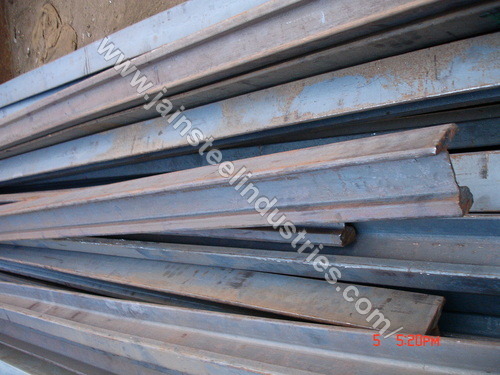
Tell us about your requirement

Price:
Quantity
Select Unit
- 50
- 100
- 200
- 250
- 500
- 1000+
Additional detail
Mobile number
Email

More Products in Rail Line Category
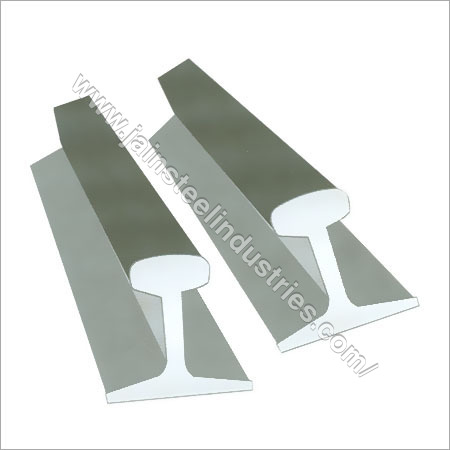
Steel Rails
Minimum Order Quantity : As Per Your Requirement Ton
Grade : High grade steel
Shape : Steel Rails
Product Type : Steel
Alloy : Carbon Steel
Usage : Railway Track
Mild Steel Rail Line
Minimum Order Quantity : As Per Your Requirement Ton
Grade : High grade mild steel
Shape : Mild Steel Rail Line
Product Type : Steel
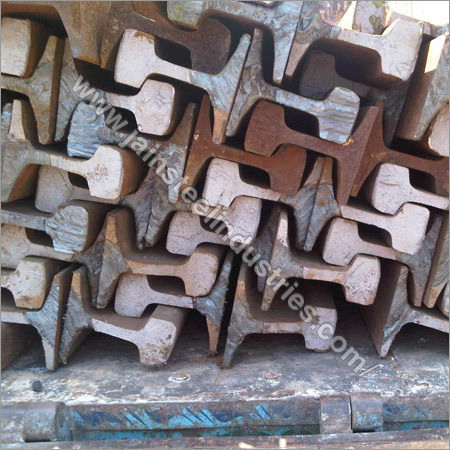
Rail Line
Grade : AISI 1080
Shape : Other, Rectangular
Product Type : Other, Rail Line
Alloy : Yes
Usage : Railway Track Construction

 Send Inquiry
G. T. Road, Khanna Side, Mandi Gobindgarh - 147301, Punjab, India

Mr. Pankaj Jain
(Director - Production And Planning)
Mobile :08045479044
(Director - Marketing & Quality Control)
 Send Inquiry
 Send SMS
Developed and Managed by Infocom Network Private Limited.
